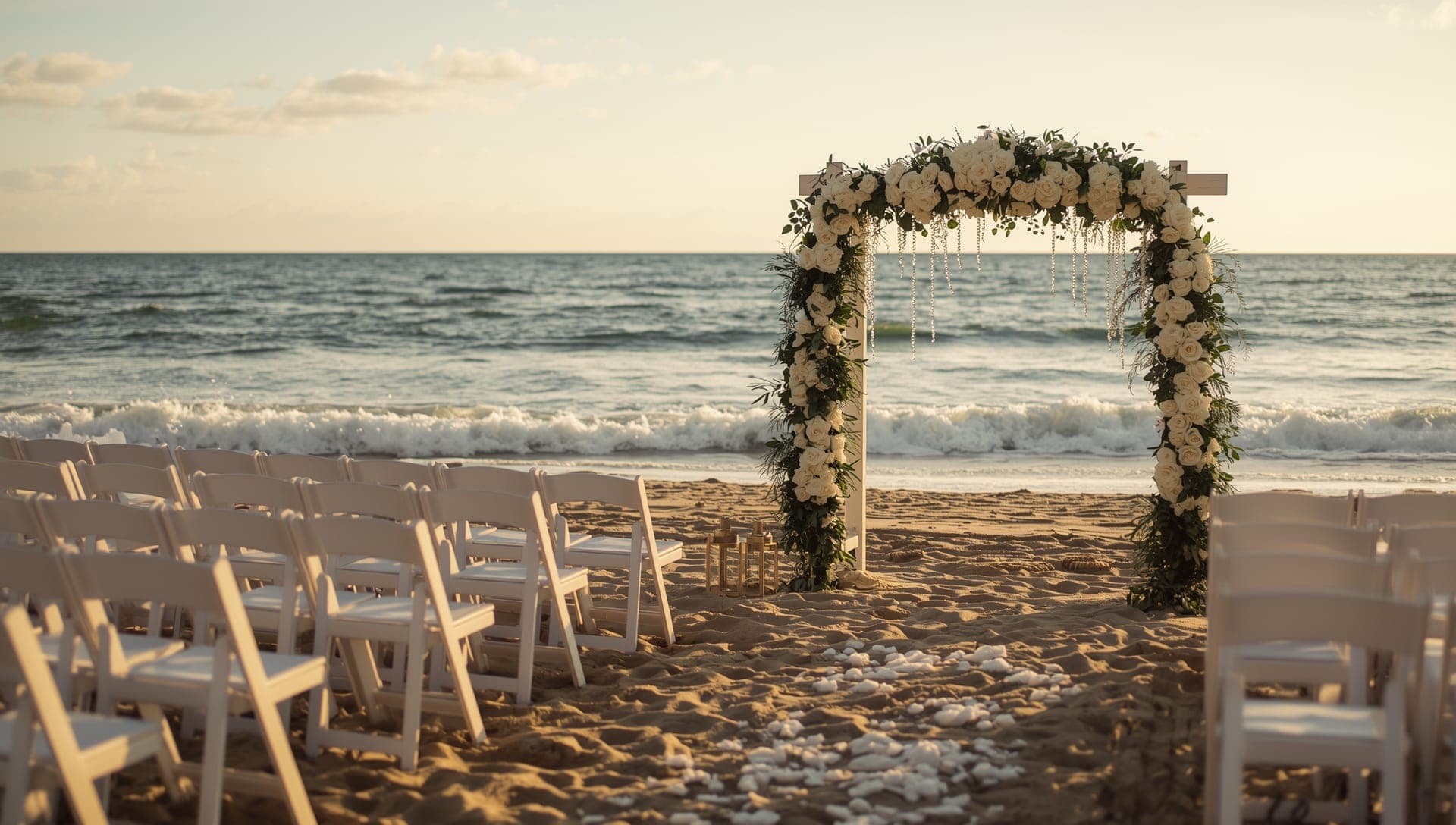
A Queensland beach wedding,
from Friday to Sunday
Where to say your vows on the sand, where your guests eat and stay, and how to keep a coastal weekend effortless — real council permit rules, tide and golden hour, and a wet-weather plan included.
A beach wedding isn't just a ceremony on the sand — it's a whole coastal weekend your guests have travelled for. This guide shows how the pieces fit together across Queensland's beach regions: a relaxed welcome dinner, the ceremony (with the real council permit rules), a beachfront reception, a late-night wind-on and a slow Sunday recovery.
First, everyone settles in
Base the weekend in one of these pockets and book the house first — everything after is walkable or a short ride away.
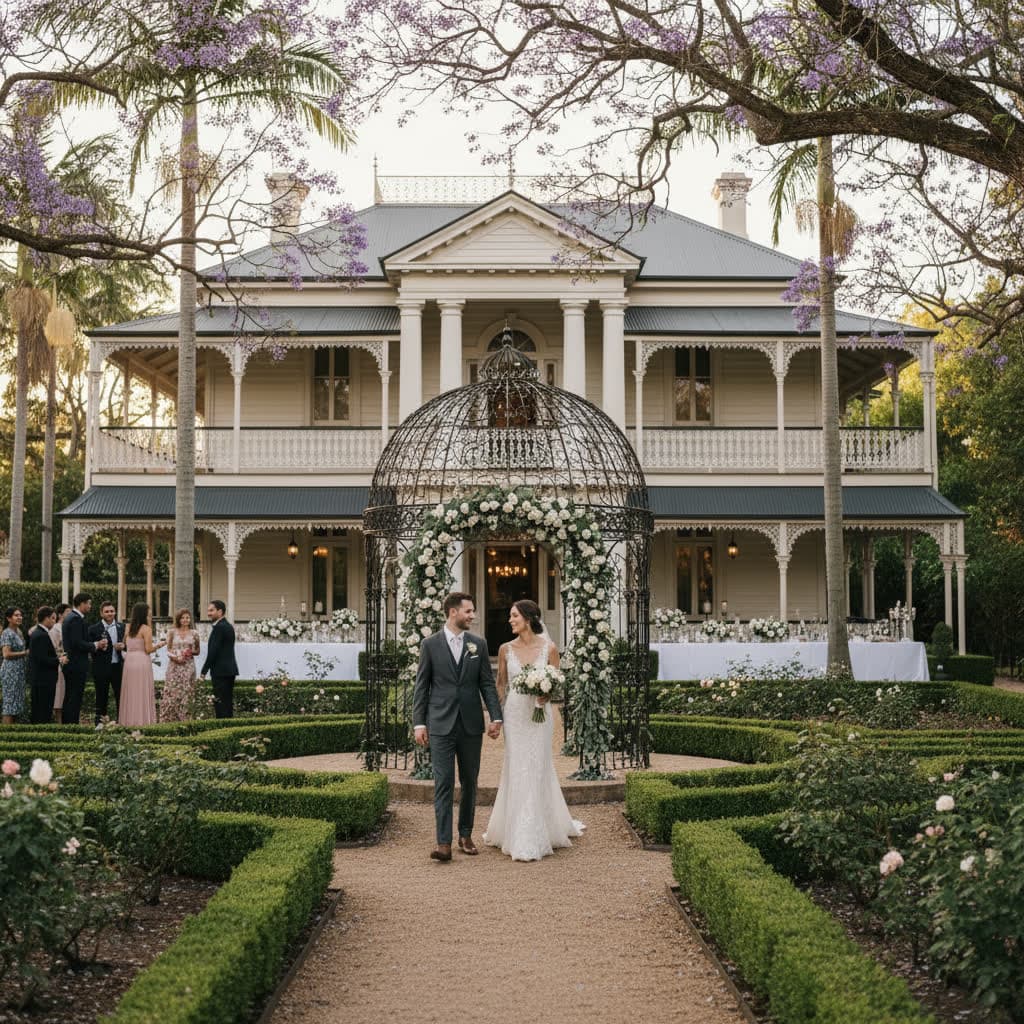
Gold Coast (Broadbeach / Surfers)
The densest resort strip — high-rise hotels and apartments between the beach and the tram line, walkable to beachfront receptions and late-night bars. The most accommodation supply on the Queensland coast; bookable year-round.
Sunshine Coast (Noosa)
A calmer, premium pocket around Noosa — beachfront resorts and apartments a short walk from the national park, the river and the ceremony beaches. Less supply than the Gold Coast; book early in peak season.
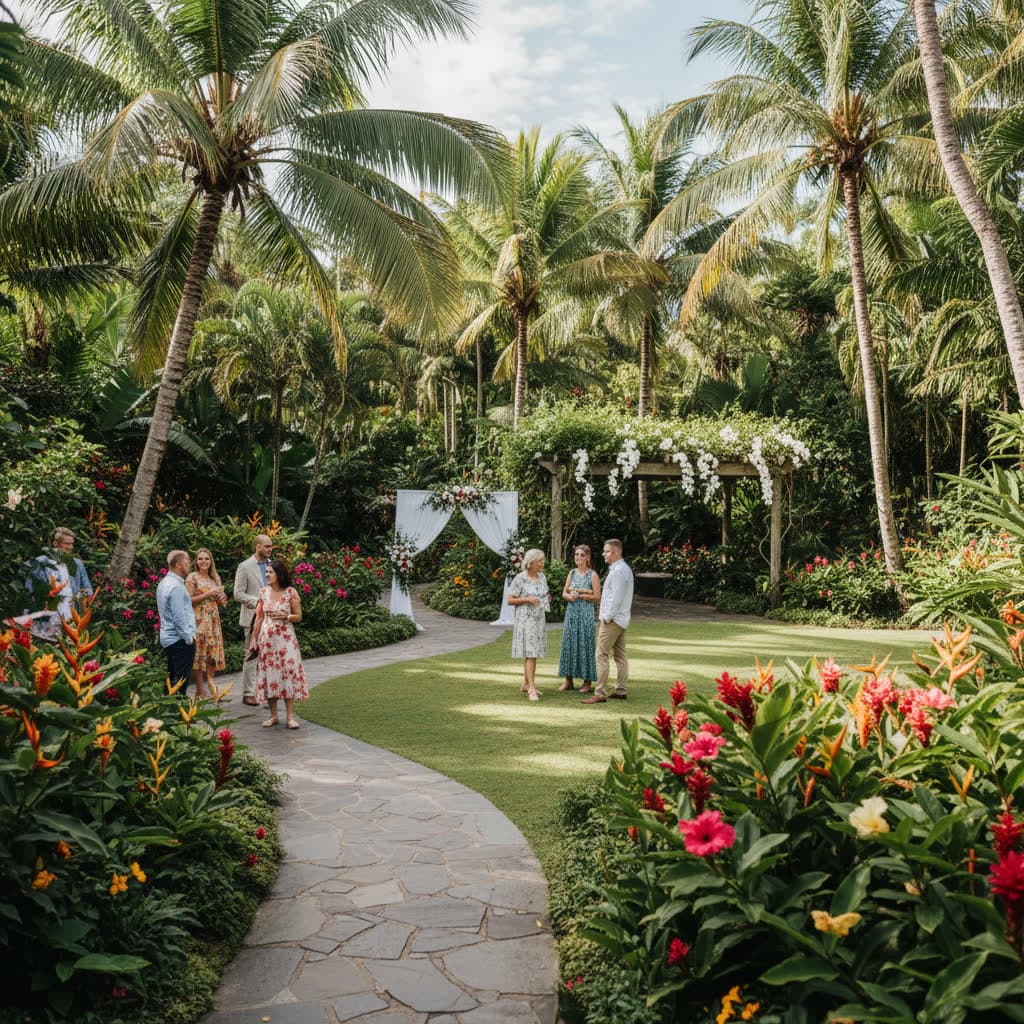
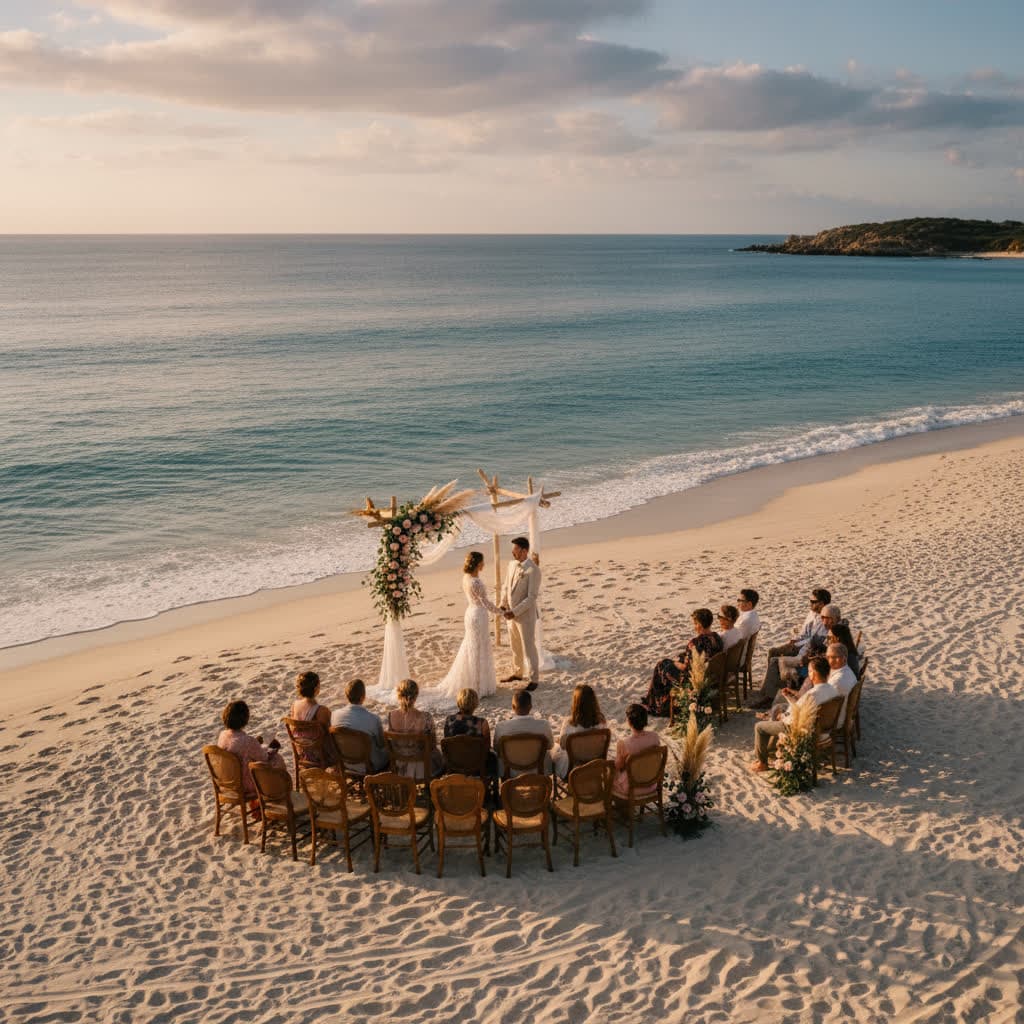
Tropical North (Palm Cove / Port Douglas)
The tropical north — palm-lined resort villages north of Cairns with the reef on one side and rainforest on the other. Genuinely special for a destination wedding; plan around the December–March wet season and note stinger season (November–May) rules out ocean swimming without a suit.
Barefoot vows at golden hour, the reef or the headland just behind your shoulder — and the reception a short walk down the sand, not a convoy up the coast.
Then the weekend unfolds
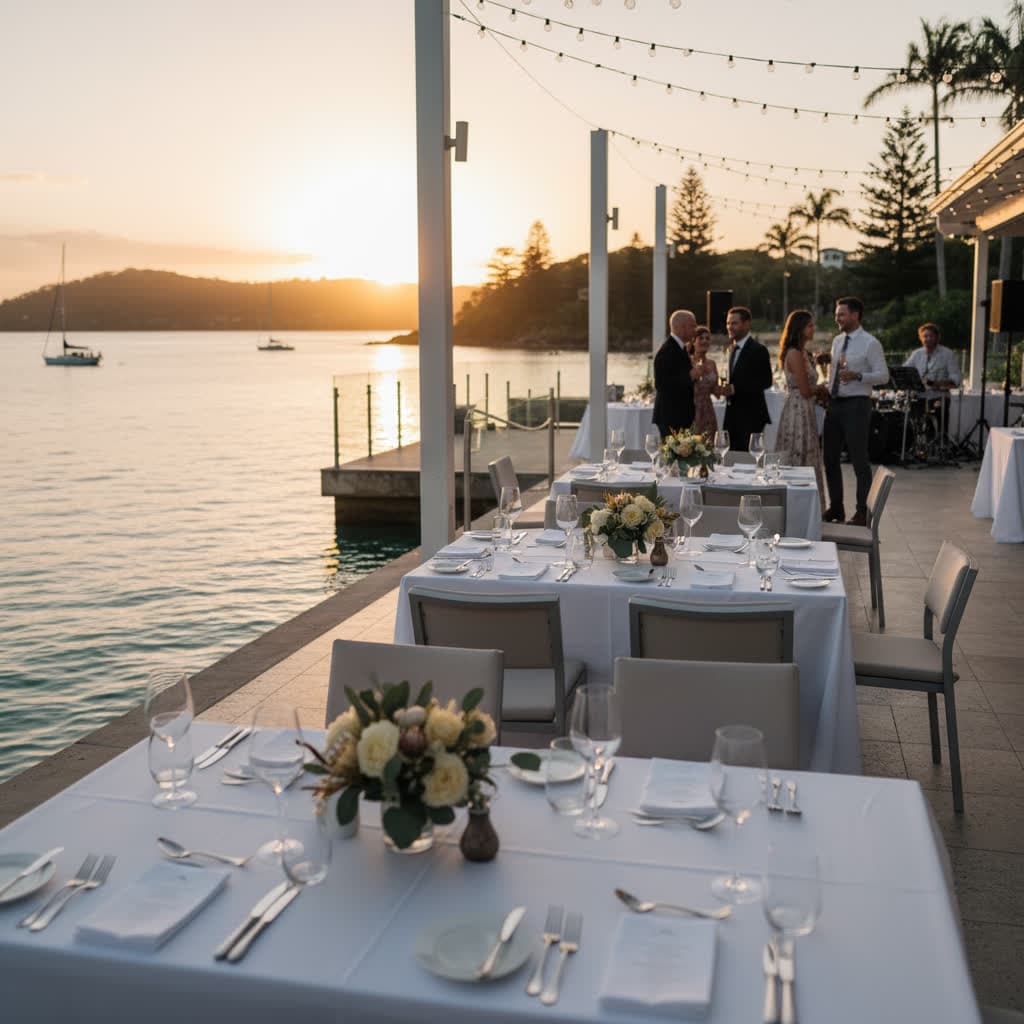
A beachfront welcome-dinner spot
A relaxed coastal restaurant to kick the weekend off — shared plates, sunset light, no formal seating plan.
Your guests have travelled. The first night sets the tone — pick a beachfront restaurant somewhere easy and central to where they are staying, with the ocean close enough that everyone arrives in holiday mode. Look for a room that opens to the sea air but can close against the afternoon breeze, and one that handles groups without a hushed private-room feel.
A council-permit beach ceremony site
The vows on the sand — a public beach site booked by council permit, with the ocean as the backdrop.
Most Queensland beach ceremonies need a council permit, and the rules sharpen quickly once you add chairs, an arch or music. The big councils differ a lot: the City of Gold Coast issues a free two-hour beach wedding permit (max 50 people, 10 chairs, no alcohol); Noosa Shire charges about $651 for a three-hour window at Main Beach (24 chairs, acoustic music only, no confetti); Douglas Shire (Port Douglas) needs no approval for under 50 people as long as there's no amplified music or structures. A permit reserves the time, not exclusive use — expect passers-by. Two things matter most everywhere: a wet-weather backup, and a golden-hour window (around 45–50 minutes before sunset) for your photos.
A beachfront reception venue
Dinner with the ocean right there — a beachfront restaurant, resort or function room that keeps the night walkable from the ceremony.
Coastal modern Australian leaning into seafood — the standard up and down the Queensland coast.
A hosted bar that can move from toasts to a late-night round without changing rooms.
Beachfront or on-water: Freedom Shores (Airlie), The Salty Lime Co (Emu Park), or Noosa River Canal Cruises (floating, up to 38) each show a different way to do it.
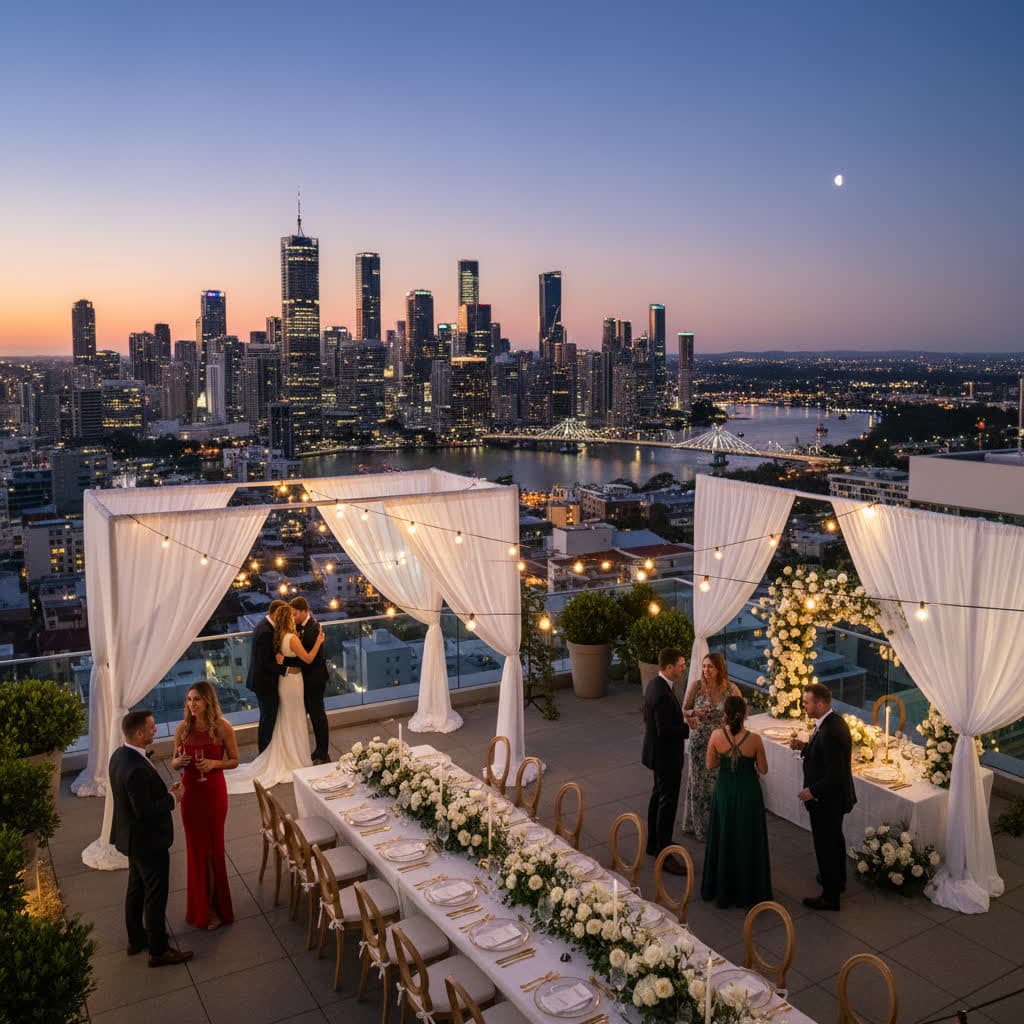
A coastal late-night bar
Where the night spills after the reception winds down — a low-lit bar within walking distance, no booking required.
When the reception ends, the night doesn't have to. Every beach precinct in Queensland has a walkable late bar — a coastal wine or cocktail spot a short walk from the reception and the accommodation. Keep it walkable; the whole point of a beach weekend is that no one's organising transport at midnight.
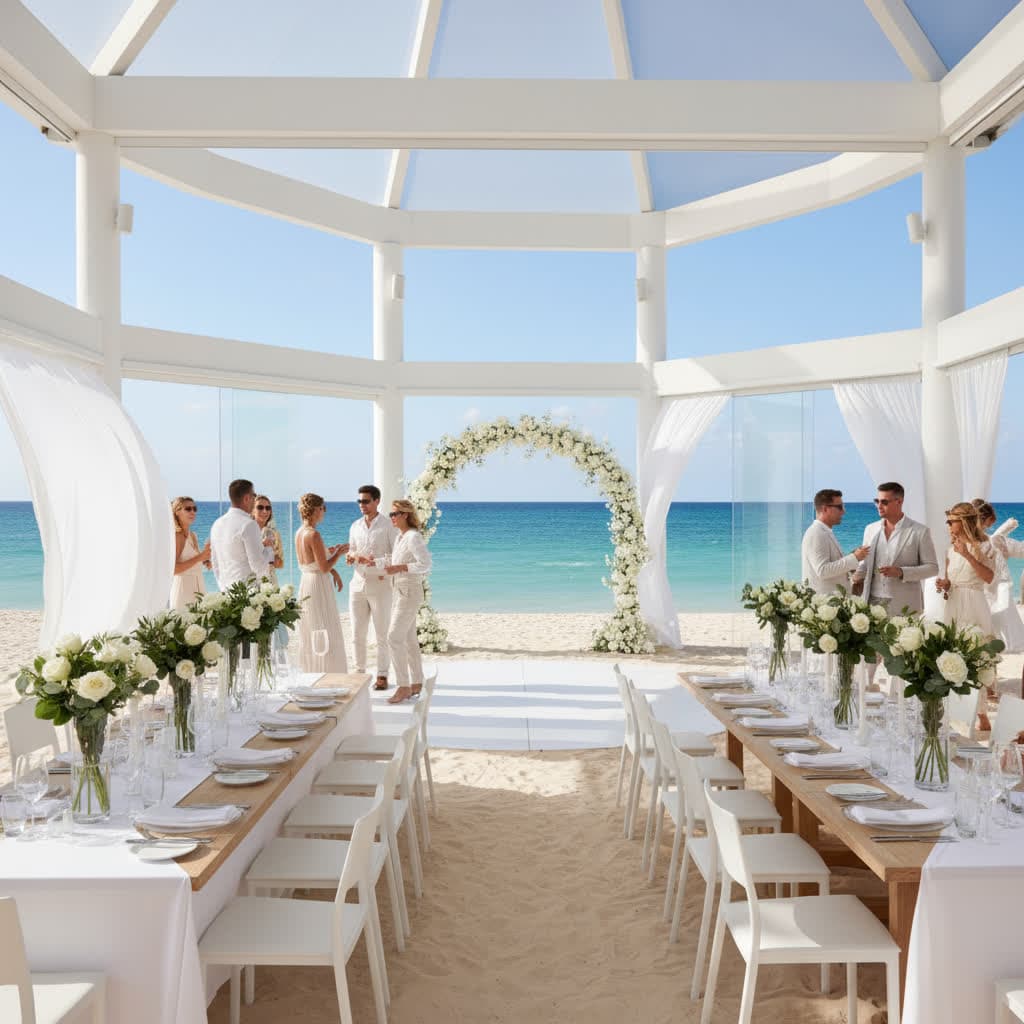
A beachside recovery brunch
A slow morning near the sand — coffee, a swim, and the easy conversations that only happen the day after.
The recovery brunch is the underrated part of a beach wedding weekend — where the real conversations happen and everyone finally relaxes. Keep it casual near the beach, close enough that guests can roll into a swim afterwards. No seating plan, no speeches — just good food and coffee with the sand a few steps away.
Good to know
Do I need a permit for a beach wedding in Queensland?
Usually yes — and the rules differ sharply by council. City of Gold Coast: a free two-hour beach wedding permit, max 50 people, 10 chairs, no alcohol. Noosa Shire: about $651 for a three-hour window at Main Beach, max 24 chairs, acoustic music only, no confetti. Sunshine Coast Council: around $83–86 for a two-hour permit. Douglas Shire (Port Douglas): no approval needed for under 50 people as long as there is no amplified music or erected structures. Always check the specific council for your beach.
What is the best season for a Queensland beach wedding?
April to October is the peak window — lower humidity and rainfall across most of the state. If your beach is in Tropical North Queensland (Cairns, Palm Cove, Port Douglas) or the Whitsundays, build in extra wet-season planning from December to March, and note stinger season runs roughly November to May (ocean swimming needs a stinger suit or enclosure).
What's the wet-weather backup plan for a beach ceremony?
Beach sites are exposed to wind, tide and afternoon storms, so line up an indoor or covered alternative before the day. Ask your reception venue whether they can host the ceremony if the weather turns, and confirm shade, tide timing and any sound limits with the council when you book the permit. The afternoon sea breeze freshens after about 2–3pm, which is worth weighing against a calmer morning slot.
Can we have the reception on the beach too?
A full reception on the sand is logistically harder than a ceremony — weather, wind, equipment, permits and guest comfort all ramp up, and most councils cap structures and prohibit alcohol on the beach. The workable pattern is a sand ceremony followed by a reception at a beachfront venue nearby (a restaurant, resort or function room), so guests walk rather than convoy.
Plan your Queensland beach wedding
Browse beach and coastal venues across Queensland, or read the legal essentials before you start shortlisting.